Learning Outcomes - Professional
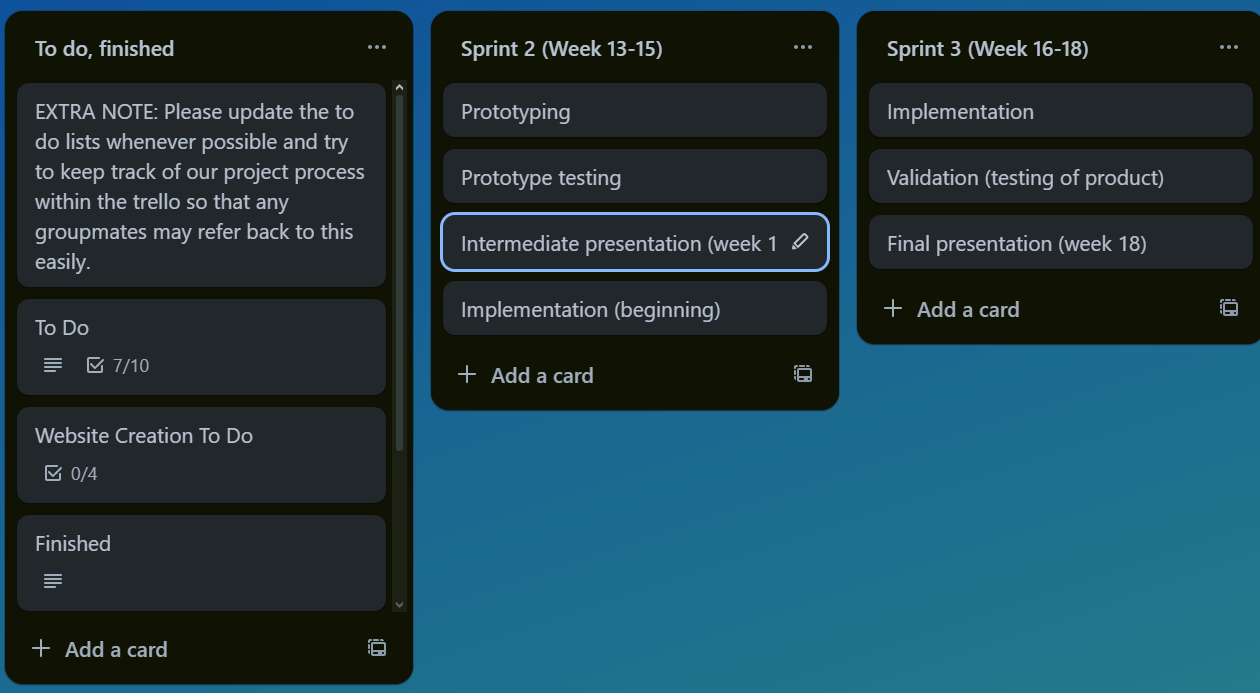
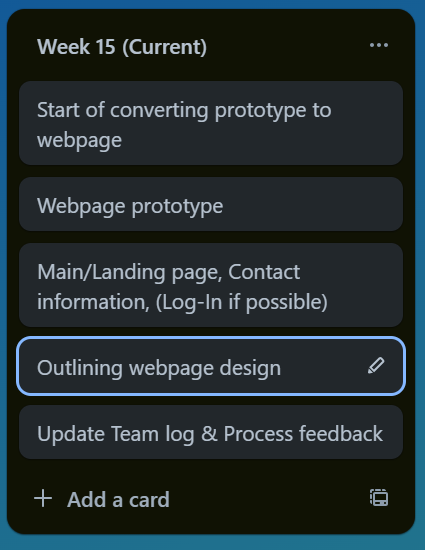
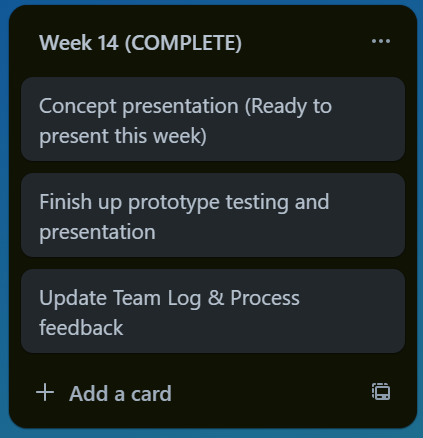
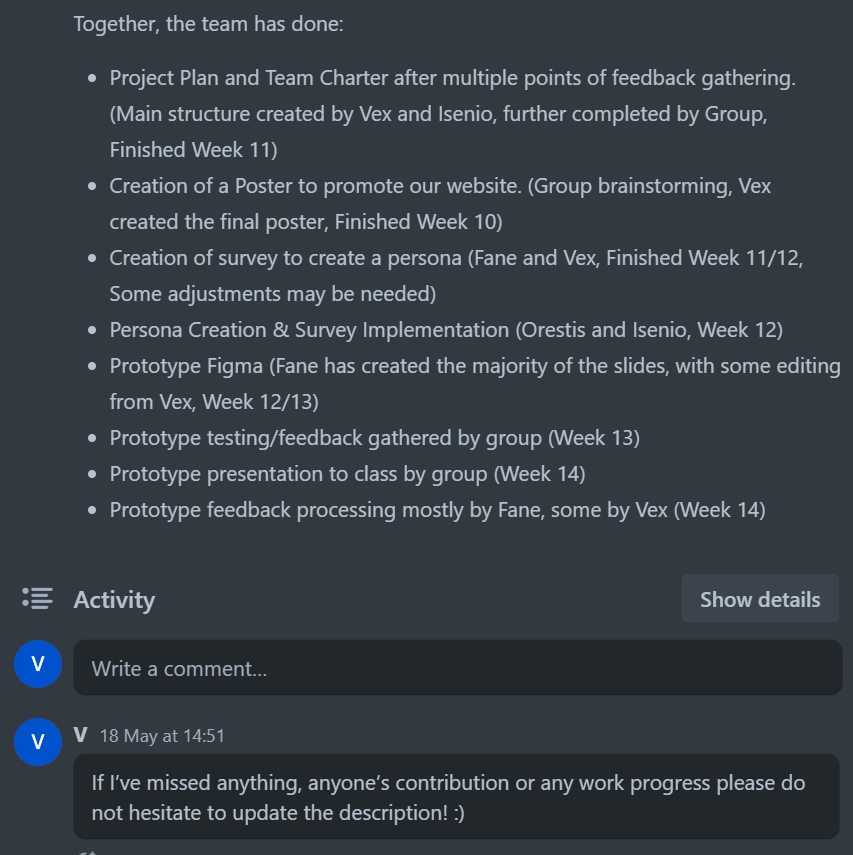
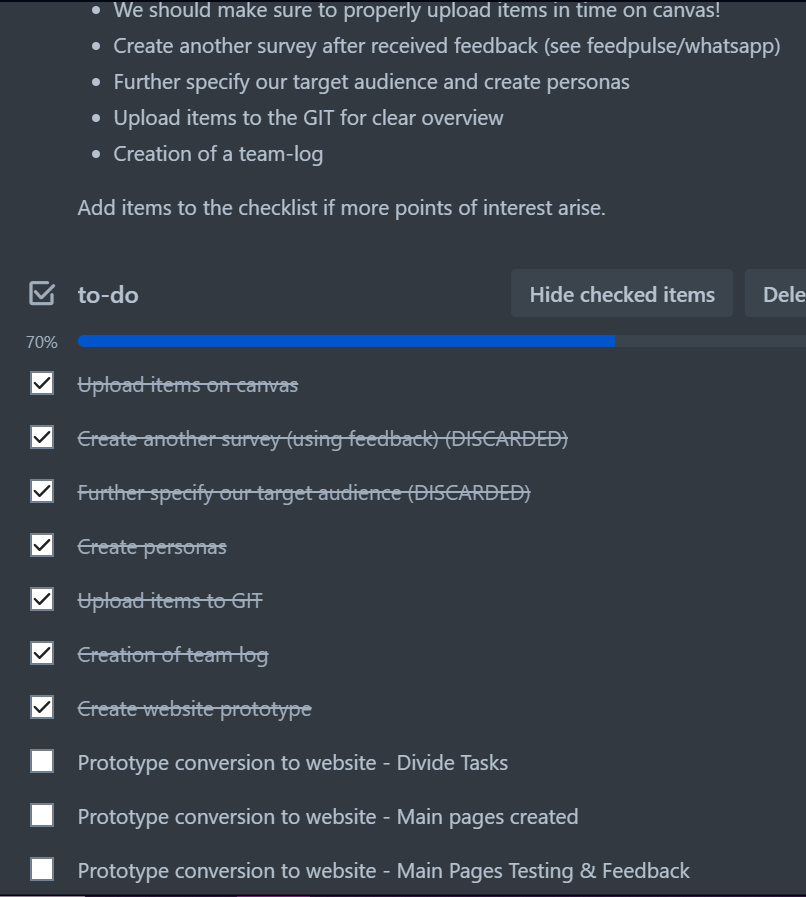
This image box displays images that corrolate with the learning outcomes for Professional Skills. It shows images such as the group Trello which I managed. The learning outcome statements below can be confirmed with the corrosponding evidence listed on the Evidence Gallery page.
You apply professional practice, both individually and in teams, in the areas of project organisation, communication with stakeholders, exploratory research, and reporting.
Project Organisation
For a given assignment you – with guidance - make a planning (timing & part-tasks) with your team members. You make agreements about the expected quality.
Done by: Creating a project plan and team charter with my group, being the main editor of and planning with the use of a trello board that shows sprints for each week; which are quick overviews for what is required for our group to complete each week. Also implemented to-do lists and a team log to keep track of necessary items of work.

Communication and reporting
You take the direct stakeholder into account when working on an assignment. You pay attention to what you want to communicate, and in which shape you do this. You recognize tasks within the group work and take on your role within the group. You are aware of bias and the consequences bias could have.
Done by: Creation of a survey and an (unused) persona, assisting in the creation of a persona and the structure of a survey. Attempting to form structure within the group and assign tasks where possible through the trello. Clear communication with group members and teachers during times of absence or illness.
Exploratory research
You explore and ask questions throughout the solution process. You answer questions by using an appropriate approach: pragmatic, critical and based on multiple sources. You take the initiative in asking for, and reflecting on, feedback. You identify your own core values as the basis for your study career and professional development.
Done by: Asking questions of teachers on pointed feedback for the portfolio and project websites to further refine my skills. Attempting to implement the DOT framework where possible. Researching various coding methods to implement my ideas within the portfolio website.Feedback and reflection
You plan your assignments efficiently and realistically. You work result-oriented on your assignments. You recognize learning needs in yourself, are open to feedback, and reflect on this.
Done by: Creating a project plan and basing our trello off of this project plan and the provided sprints within the assignments. Reflecting on feedback where possible, which is shown through changes made to the webpages and new things implemented.
Core Values
You identify your own core values. You make considered choices for your development and your study program.
Done by: I focused on the need to challenge myself. I wanted to explore various designs and learn as much as possible. I made sure to rest where needed due to my chronic illness.
Learning Outcomes - Technical
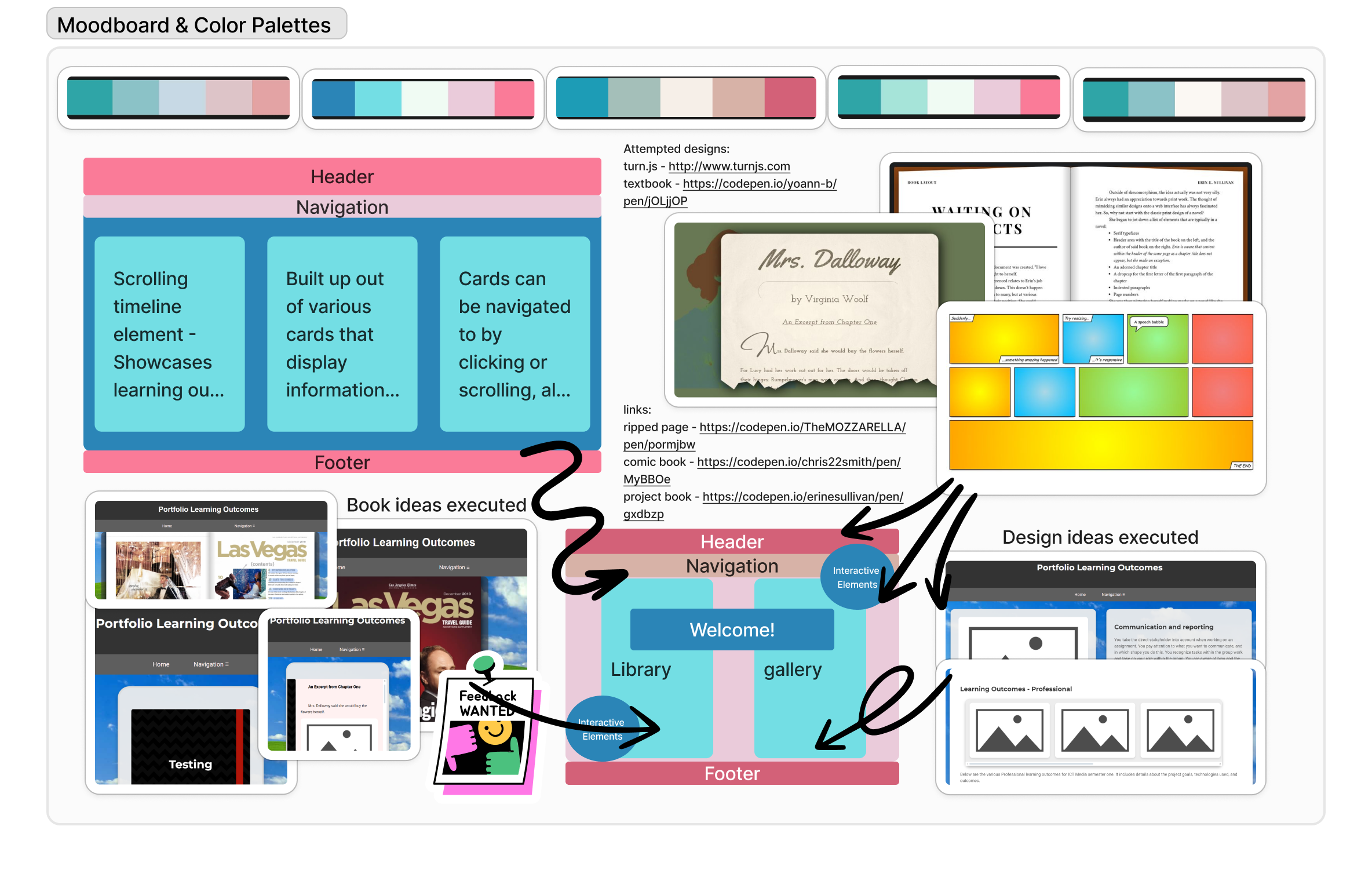
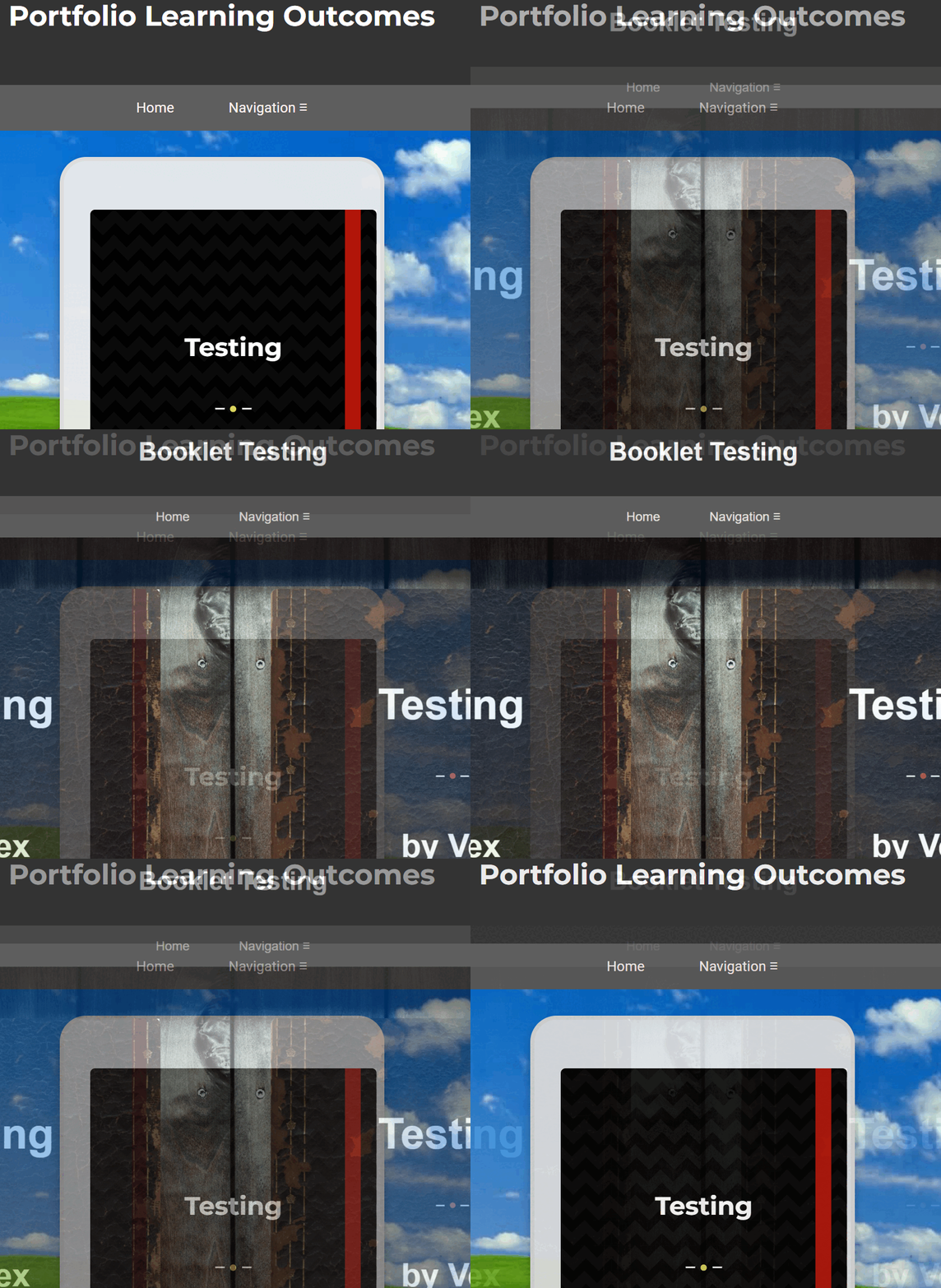
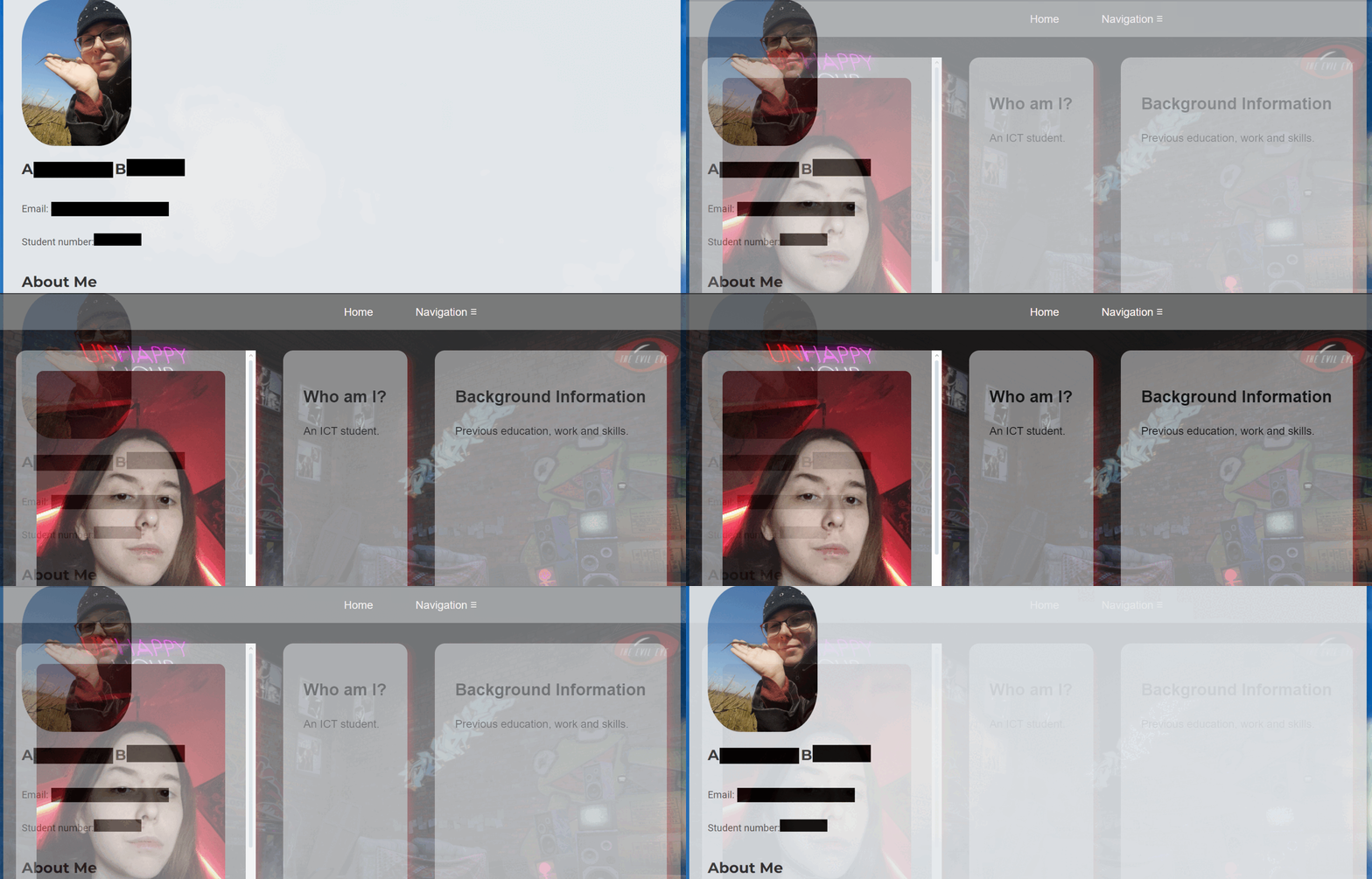

This image box displays images that corrolate with the learning outcomes for Technical Skills. It displays images and gifs that showcases some of the steps and processes I've undergone while working on my portfolio website and group project. Some gifs show changes and iterative steps between various versions of my website. For a more elaborate overview, visit the Evidence Gallery page.
Trends and Developments
You have studied the various developments in the area of digital experience design. You have formed an opinion about it. Based on this you justify your choice of study direction in this domain.
Done by: Various attempts at creating my book code prototype, both by attempting it myself and consulting other sources that have done a similar concept before. Through trial and error realizing what I am and am not capable of working with at my current skill level, and what I am capable of doing within a Media Profile. Also completed by playing around with view width designs versus the use of media queries.
Iterative Process
You show iterations in the work process and you explain how feedback from users and experts has contributed to your design choices. Your design meets the needs of the end user and is aesthetically justified.
Done by: Processing of peer and teacher feedback within my website design choices, pivoting away from 'word style' documenting and creating a unique design using image aspects that reflect me as a person. Various iterations within the book design (up to 7 definite versions before the final version).
Interactive Prototypes
You make digital products that create a specific, purposeful interaction between human and machine. As input for this you have made sketches, wireframes and prototypes. You use structure and style languages e.g. HTML and CSS.
Done by: Attempting to implement a design in HTML and CSS that adds an interactive element to my website, such as "moving" buttons on pointer hover, cards that can be scrolled through or a book that can be opened. I created a basic paper drawing prototype (later reimagined as the moodboard) of this first and then created prototypes out of simple wireframes and design iterations using codes I found on tutorial websites or API websites.
Target Group
During the developmental process you take the interests and needs of the end user into account.
Done by: Implementing the results from a survey and interviews into our project website to meet user demands. Implementing feedback received on design choices in both the group project and my personal portfolio.